The suicide rate among transgender people is more than three times as high as in the general population. And as much as we like to consider these cases an exception, I have had several conversations with my trans siblings about suicide attempts, suicidal ideation, or other forms of self‑harm.
Luckily, I am not part of that group.1 But can I really mark myself safe? Unfortunately, not. It has become more and more clear to me that I am as close to the edge as many others in my community.
The Art of Distraction
Since childhood, I knew something about me was different. And by puberty, I had already labeled myself a pervert and considered myself broken. I did my best to hide this from the world, but I always carried the pain with me, and over the decades it infected every part of my life.
As the pain grew and my discontentment with life deepened, my mind kept spinning, frantically trying to understand who I really was and what I should do with myself. It felt like water circling a drain.
In the beginning, it was relatively easy to break these cycles. Listening to music, falling in love, working hard, and partying even harder. I needed these distractions to escape my thoughts for a little while, and I needed these activities as some form of positive identity. A music enthusiast. A rockstar engineer.
Just like an addict, I had to constantly raise the stakes. I needed more and more just to achieve the same effect: a short moment of peace. But I was starting to reach the limits. Music would not go any louder. Love would not get more intense. Work increasingly conflicted with my personal values. And at some point, I was simply too tired to enjoy partying.
In 2015, with a job that had me on the road for 180 days a year, constantly flying between Los Angeles, Berlin, and Southern China, I stopped functioning. The self‑hate I already carried multiplied because of the things I had to do to be successful. Work became unbearable, while the company wanted even more out of me.
In a moment of sanity, I did the one thing that made sense: I quit and started my own business. It removed an important source of self‑hate and gave me breathing room. But it came at a cost. By quitting, I also crippled my identity and removed one of my most effective methods of distraction.
I started making music again. And yes, it worked for a while, especially when busking on the street. But the hobbyists I played with did not share my ambition, and they took issue with me being too tightly wound for a casual after‑hours activity. At the same time, my own skills were not strong enough to seek out better musicians.
In parallel, I started riding motorcycles again. I had loved that since I was 15, riding friends’ bikes without a license, all the way until we immigrated to the US. After a ten‑year hiatus, having a bike again felt like exactly what I needed. But quickly, watching the scenery roll by was no longer enough. I needed an adrenaline kick.
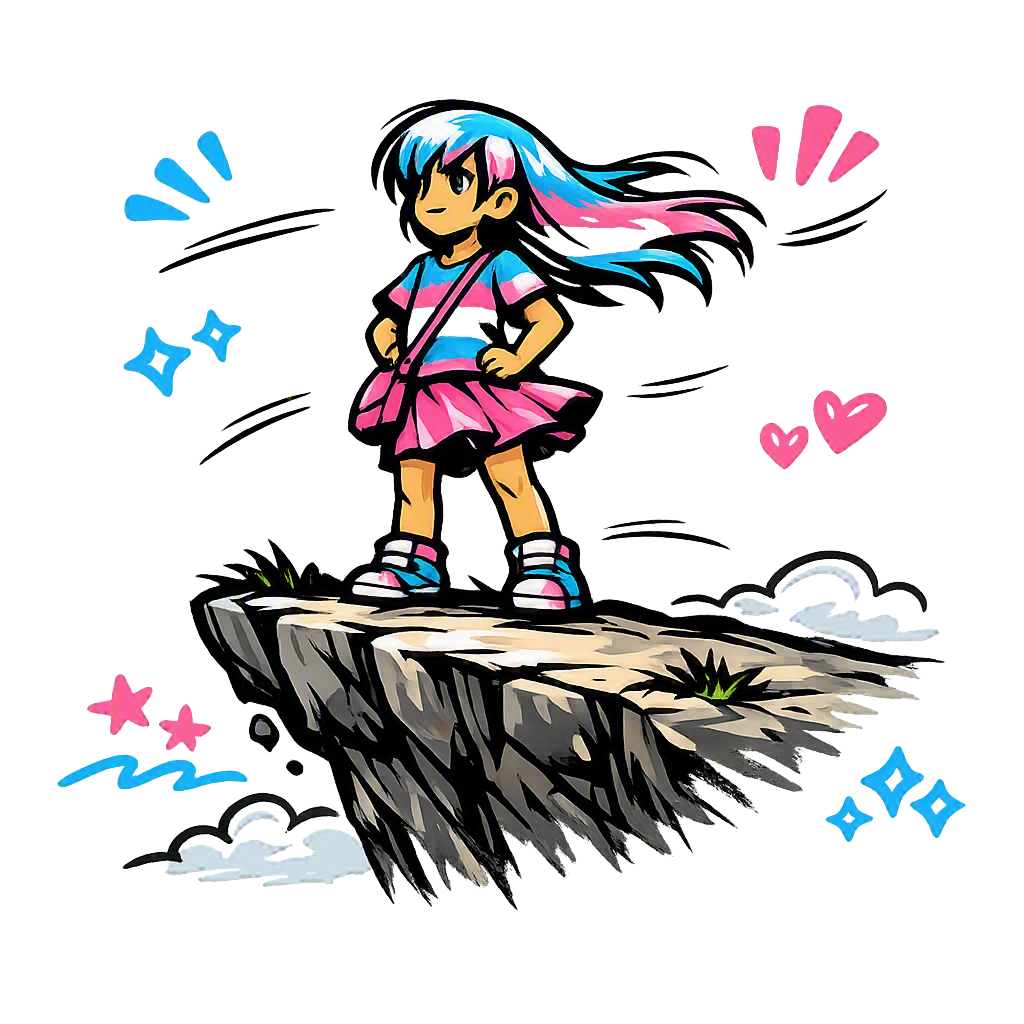
With every ride, I stepped it up one more notch.2 I developed a reckless disregard for my life. It is not that I wanted to die, but it also did not seem to matter, as long as I could get out of my head. That changed in summer 2020, when I almost killed myself. I was riding with a group along a twisted mountain road near Mount St. Helens. We were all going way too fast, and I slipped on a patch of dirt, with a sharp cliff dropping down just a few feet away.
Again, I did the only thing that made sense: I sold the bike. On the surface, it made my life safer, for the sake of my family. But it also removed yet another method of distraction.
Running Out of Ways to Cope
I bought a bicycle and started riding that instead. It was the first time in decades that I had worked out at all. I enjoyed sweating, I enjoyed the scenery, but it was not the same. My physical limits did not allow me to push hard enough to effectively clear my mind for more than a few minutes.
Deprived of almost every method of lasting distraction, things started to unravel. When my wife left the house, I would quickly get dressed, take a walk somewhere, and feel like myself for half an hour. Then I rushed home, removed my makeup, dressed back in male mode, and hid my clothing stash.
What felt good for a brief moment was followed by hours of guilt and shame. Guilt that I was not getting my work done and that I was lying to my wife, and shame for being my creepy self. A vicious cycle with no escape.
By 2024, I had stopped functioning altogether. I could not get my job done, I could not stop my mind from spinning, and I could not live with myself anymore. Something big was going to happen, one way or another. I had to get ahead of it, just to break the cycle and end the pain. I decided to come out.
Coming Out and Moving Forward
But let’s be clear about what was at stake in that moment: my marriage, my family, my friends, and my career. And I was willing to trade all of that for peace of mind. This was not bravery or an expression of free will. This was not an action under my own terms. I was simply backed into a corner, and I would likely have wagered even more if it had been necessary.
There is also another way to look at this moment. In coming out, I did not make a decision about my life. It was much bigger than that: I decided to live.
Since then, I have not come that close to the edge again. With every step of my transition, my quality of life has improved. I still have most of my family, I still have some of my old friends. And I have newfound chosen family and friends with whom I share a genuine and deep connection. I no longer question who I am, and I am slowly making peace with my past.
But does that mean I am safe now? Unfortunately, the answer is still no. I have to carefully curate my media diet. I have to decisively cut negative elements from my life. Every time I encounter transphobic hostility, it chips away at my will to continue the fight. Every time I see government attempts to push my community back into the closet, remove our rights, or restrict our health care, my stress level spikes and leaves me with severe anxiety. And every time I see my trans siblings suffer, I feel their pain as if it were my own.
So no, I am not safe. There are days when I feel like human garbage, like a burden on my family, and a stain on civilization. There are days when I just sit and stare out the window. Days when all I want is sleep. Days of anger, frustration, depression, darkness, and dysfunction. Days when I feel lonely, useless and broken.
What keeps me going is hope. I guess I am an eternal optimist. I still believe that one day things will get better. I am still willing to fight for that future. But I am also tired, and I can feel that my strength will not last forever. And I am scared of what will happen then.
All I can do right now is surround myself with people who care, and trust that we will be ok as long as we can comfort and hold each other. My hugs tend to be a little too long and a bit too tight, because they carry everything I cannot put into words: fear, hope, gratitude, and the stubborn belief that we can make it through this together.
With heartfelt hugs, Liz